Don't Buy on Lake Lanier Until You Watch THIS
Don’t Buy a Lake Lanier Home Until You Check These 7 Things
Buying a home on Lake Lanier can mean waking up to beautiful water views, spending weekends on your boat, and enjoying the lake from your own backyard. But before you spend $800,000, $1 million, or even $2 million on a lakefront property, there are a few things you need to understand.
On Lake Lanier, you’re not just buying a house. You’re buying a specific location on the lake, a dock, and the access between your home and the water.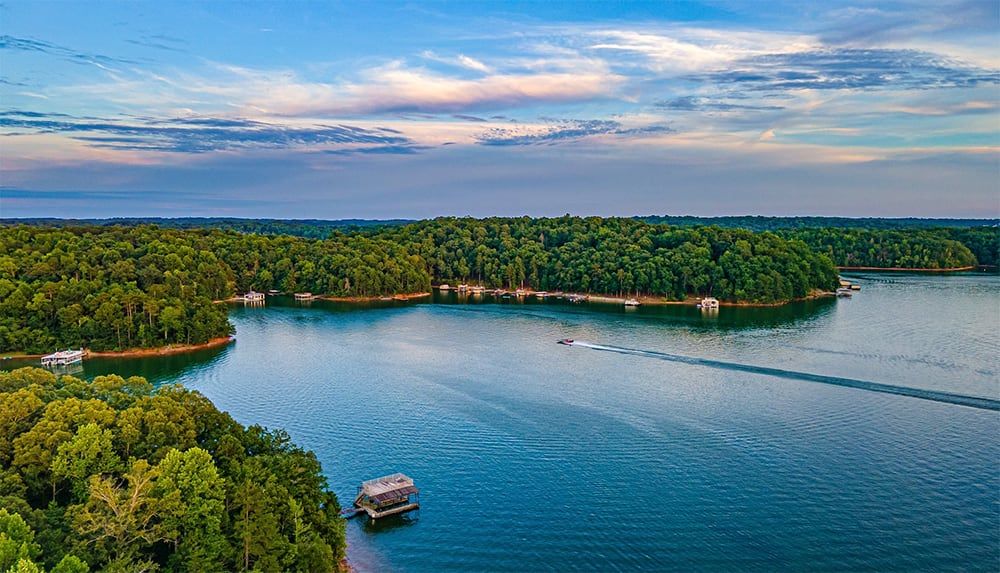
A renovated kitchen can be replaced. A dated bathroom can be updated. But you cannot move your property to a deeper part of the lake, change its shoreline position, or assume you can build a bigger dock after closing.
That’s why periods of low water can actually be valuable for buyers. When Lake Lanier drops below its normal summer level, exposed shorelines and shallower coves reveal details that may be harder to assess when the lake is full.
According to Sarah Maslowski of KeyPoint Homes Group, a local real estate agent who lives on Lake Lanier and helps buyers relocate to North Metro Atlanta and North Georgia, the most important parts of a lake property are often the ones buyers overlook during an ordinary home tour.
Here are seven things to evaluate before buying a Lake Lanier home—and how to determine whether a property fits the way you actually want to use the lake.
1. Understand What Low Lake Levels Reveal About a Property
When Lake Lanier is at full summer pool, a waterfront property can look picture-perfect. The dock appears surrounded by water, the shoreline looks attractive, and it may be easy to imagine stepping onto your boat whenever you want.
But what happens when the water level drops?
Lower water can reveal shallow lakebeds, exposed shoreline, limited room to reposition a floating dock, and terrain that may affect access to the water.
These details matter because the property that looks ideal when the lake is full may become much less practical when water levels fall.
Why Lake Lanier’s water level changes
Lake Lanier is a managed reservoir, not simply a lake that rises and falls with rainfall.
The U.S. Army Corps of Engineers manages releases from Buford Dam as part of the larger Apalachicola-Chattahoochee-Flint River system. The reservoir supports multiple authorized purposes, including water supply, downstream needs, hydropower, and recreation.
Rainfall is another important factor. During extended dry periods, the surrounding soil can absorb some of the initial rainfall before substantial runoff reaches the lake.
That means a few rainy days do not necessarily translate into an immediate recovery in lake levels.
How low is considered low?
The transcript accompanying this article described Lake Lanier as more than six feet below full summer pool at the time it was filmed. It also cited a historical low of approximately 1,050 feet above sea level in December 2007, compared with a summer full pool near 1,071 feet.
These are historical and time-specific figures, not a statement of the lake’s current level. Water levels change, so buyers should check current U.S. Army Corps of Engineers information before evaluating a property.
Buyer takeaway: Don’t judge a lakefront home only when the lake looks its best. If possible, assess the property under lower-water conditions to understand how the dock, shoreline, and access may perform.
2. Check the Water Depth Under the Dock—not Just the View
One of the most important questions when buying on Lake Lanier is deceptively simple:
How much usable water is underneath the dock when the lake level drops?
Two homes can have attractive docks and similar water views but offer very different boating experiences.
A property in a deeper location may retain useful water beneath its dock when the lake drops. A property in a shallow cove may become difficult to use, even if the house itself is beautiful.
Why floating docks require attention
Floating docks rise and fall with the water level. As the lake drops, a dock may need to be repositioned to maintain access to deeper water.
This is a normal consideration for lakefront ownership. The challenge comes when a property has limited room to move its dock.
Imagine a home near the back of a shallow cove. The dock has already been moved outward to follow the falling water, but neighboring docks restrict how much farther it can move.
At some point, there may be no practical room to reposition it without crossing into areas occupied by neighboring docks or otherwise violating applicable requirements.
The result could be insufficient water beneath the dock for your boat.
What buyers should inspect
When visiting a Lake Lanier property, examine:
-
The water depth beneath and around the dock
-
How far the dock has already been repositioned
-
Whether there appears to be room to adjust it farther
-
The positions of neighboring docks
-
The shape and depth of the surrounding shoreline
-
Whether the dock remains usable at the observed water level
A dock that appears perfectly positioned when the lake is full may tell a different story during a drought.
Buyer takeaway: If boating is a major reason you’re buying the property, evaluate the dock’s usability under changing water conditions—not simply whether a dock is present.
3. Be Careful Buying at the Back of a Shallow Cove
Coves are popular for good reason. They can offer a quieter atmosphere, less exposure to passing boat traffic, and a more sheltered setting for swimming or relaxing near the water.
But not every cove offers the same combination of privacy and water depth.
Properties toward the back of a shallow cove may experience falling water levels more noticeably. As water recedes, docks may need to extend farther out, and the available depth can become a serious concern.
In some situations, a floating dock can become difficult to move if its floats settle onto the lakebed. Specialized help may be necessary, and access to the boat may be compromised until the water rises or the problem is resolved.
This is why shoreline position deserves as much attention as the house itself.
Cove versus open water: Which is better?
| Feature | More sheltered cove | More open or deeper-water location |
|---|---|---|
| Atmosphere | Often quieter and more protected | Typically more exposed to passing boats |
| Swimming and floating | May appeal to buyers seeking a sheltered setting | Boat traffic and wakes may be more noticeable |
| Water depth | Can be limited, especially farther back in shallow coves | May offer better depth, depending on the specific location |
| Falling lake levels | Shallow areas can become difficult to use sooner | Some locations may retain more usable water |
| Best fit | Buyers prioritizing a peaceful lake experience | Buyers prioritizing boating access and deeper water |
These are general considerations, not guarantees. A cove is not automatically shallow, and an open-water location is not automatically deep enough for every boat.
Buyer takeaway: Choose the shoreline based on how you plan to use the lake. If you want peaceful afternoons swimming off your dock, a sheltered cove may be appealing—but water depth still needs to be assessed carefully.
4. Verify the Dock Permit Before Assuming You Can Upgrade
A listing that says “private dock” does not tell you everything you need to know.
Some Lake Lanier properties have small platform docks. Others have larger docks with space for a boat. Buyers who plan to spend a lot of time boating may want a covered single-slip or double-slip dock.
However, you should never assume you can replace an existing platform dock with a larger one after purchasing the property.
The U.S. Army Corps of Engineers administers shoreline use and dock permits on Lake Lanier. The type and size of dock allowed at a particular property depend on the applicable permit and requirements.
Some locations may be limited to a platform dock. The existing dock type may reflect restrictions associated with that particular shoreline location.
What to verify before making an offer
Ask for documentation regarding the existing dock and confirm the permitted configuration with the appropriate authority.
Specifically, determine:
-
What type of dock is currently authorized
-
Whether the existing dock matches its permit
-
What size and configuration are allowed
-
Whether a covered single-slip or double-slip dock is permitted
-
Whether any proposed modification would require additional approval
Do not rely solely on a seller’s understanding, a listing description, or a neighbor’s dock as proof that a similar structure will be allowed on your property.
If boating is central to your purchase, establish that the permitted dock meets your needs before committing to the home.
Buyer takeaway: Buy the dock you are legally allowed to have—not the dock you hope you can build later.
5. Walk the Entire Route From the House to the Water
A home can have a beautiful lake view and still be inconvenient to use.
Lake Lanier is surrounded by hilly terrain, and some waterfront properties have long, steep walks down to the dock. From the house, the water may look close. On foot, the journey can involve numerous stairs, steep slopes, and uneven terrain.
That might not seem like a major concern when you're touring the property in comfortable shoes. But imagine carrying coolers, towels, floats, fishing equipment, and other supplies down to the boat.
Then consider the return trip—or the forgotten item that requires you to climb back to the house.
For some buyers, a long stairway is an acceptable trade-off for a spectacular view. For others, it can substantially reduce how often they enjoy the lake.
Evaluate the walk, not just the distance
During a showing:
-
Walk from the house all the way to the dock.
-
Pay attention to the number and condition of stairs.
-
Evaluate the steepness of the path and any uneven surfaces.
-
Consider how you'll carry supplies to and from the boat.
-
Think about whether the route will remain manageable as you age.
A property with an easy walk to a good dock can be particularly desirable because the access is part of the location itself. A kitchen renovation cannot eliminate a steep hillside between the house and the water.
Buyer takeaway: If you expect to use the lake frequently, prioritize a property with a manageable route to the dock—not just a short-looking distance on a listing photo.
6. Evaluate the Shoreline and Lake Location Before the House
One of the biggest mistakes a buyer can make is becoming so focused on the house that they overlook the features that determine the lakefront experience.
A newly renovated property may have a beautiful kitchen, a spacious primary suite, and a screened porch overlooking the water. But if the dock is in a shallow location, the walk is difficult, or the shoreline does not support your intended use, the home may not meet your expectations.
Conversely, a dated home may sit on a more desirable part of the lake with better dock access and a more manageable route to the water.
That does not mean the house is unimportant. It means buyers need to evaluate the property as a complete package.
What makes a Lake Lanier location desirable?
The answer depends on the buyer, but important factors may include:
-
Water depth and dock usability
-
The ability to adjust the dock as water levels change
-
Dock permit limitations
-
The slope and condition of the shoreline
-
The distance and difficulty of the walk to the water
-
Exposure to boat traffic and wakes
-
Whether the setting suits swimming, boating, fishing, or simply enjoying the view
Low-water conditions can provide a useful opportunity to observe exposed shoreline and surrounding terrain that might be hidden when the lake is full.
However, one observation at one water level does not guarantee future performance. Buyers should combine what they see with appropriate due diligence and professional guidance.
Why lakefront prices can differ so much
Two properties that look similar on paper may offer very different waterfront experiences.
A home with an attractive dock location and easy access to the water may appeal to a different buyer than a renovated home with a steep walk and a more challenging shoreline.
The asking price alone does not explain the difference. The property’s location, usable waterfront features, condition, and the current market all contribute to its value.
Buyer takeaway: Evaluate the shoreline, dock, and access first. Then decide whether the house itself is worth the asking price and any renovations it may need.
7. Match the Property to the Way You Want to Use Lake Lanier
There is no single perfect Lake Lanier property because buyers want different things from lakefront living.
Some want to keep a boat at the dock and head out onto the water whenever the weather cooperates. Others want a quiet place to swim, float, read, and spend time with family. Some primarily want the view and are less concerned about boating.
Your priorities should determine which trade-offs you are willing to accept.
If boating is your main priority
Focus on usable water depth, the permitted dock configuration, and whether there is room to adjust the dock as water levels change.
A deeper-water location may be worth considering even if it exposes you to more boat traffic.
If swimming and relaxing are most important
A sheltered cove may offer the setting you want. But confirm the water depth, shoreline characteristics, and practical dock access before assuming it will remain convenient in lower-water conditions.
If the view matters most
You may be willing to accept a smaller dock or a less convenient boating setup. In that case, focus on the view, the outdoor living areas, and the property’s overall suitability.
Just be clear about which features are essential and which are optional.
Buyer takeaway: Define your intended lake lifestyle before you begin comparing properties. The right home for a frequent boater may be very different from the right home for someone who mainly wants a peaceful waterfront retreat.
Lake Lanier Homebuyer Checklist
Before making an offer, use this checklist to evaluate the property beyond the interior finishes.
-
Current water conditions: Have I checked the lake level and considered how the property looks when the water is lower?
-
Dock depth: Is there adequate usable water beneath and around the dock at the observed level?
-
Dock positioning: Has the dock already been moved, and is there room for further adjustment?
-
Dock permit: Have I verified the authorized type and size of dock?
-
Shoreline location: Is the property in a shallow cove, a deeper cove, or a more open-water setting?
-
Walk to the water: Can I comfortably make the trip to and from the dock?
-
Boat traffic: Does the location match my preference for sheltered water or a more open setting?
-
Future usability: Will the property still suit me if my mobility or recreational needs change?
-
Independent due diligence: Have I verified the property’s dock documentation and other relevant requirements rather than relying only on the listing?
If several of these questions remain unanswered, investigate them before moving forward.
Frequently Asked Questions About Buying a Lake Lanier Home
Is Lake Lanier a good place to buy a lake house?
Lake Lanier can be appealing to buyers who want waterfront living, boating, swimming, and outdoor recreation near North Metro Atlanta and North Georgia. Whether a particular property is a good purchase depends on its shoreline location, water depth, dock permit, access to the water, condition, and asking price.
What happens to Lake Lanier docks when the water level drops?
Floating docks rise and fall with the lake. As the water recedes, they may need to be repositioned to maintain access to deeper water. In shallow locations, a dock may eventually have limited room to move or its floats may contact the lakebed, making movement difficult.
Can I build a bigger dock after buying a Lake Lanier property?
Not necessarily. Dock construction and modifications are subject to applicable U.S. Army Corps of Engineers requirements and permits. The allowable dock size and configuration depend on the specific location and its authorization. Verify the permit and permitted options before buying.
Is a cove or open water better on Lake Lanier?
Neither is universally better. A sheltered cove may offer a quieter setting for swimming and relaxing, while some open-water locations may provide better depth and boating access. The right choice depends on the particular shoreline, water depth, boat traffic, and how you plan to use the property.
Does low water mean I should avoid buying a Lake Lanier home?
No. Low water is not automatically a reason to buy or avoid a property. It can reveal useful information about dock depth, exposed shoreline, and terrain. Buyers should use those observations as part of a broader evaluation rather than assuming that every property performs well—or poorly—when levels fall.
What should I prioritize when evaluating a Lake Lanier home?
Start with the waterfront location, dock permit, usable water depth, and walk to the water. Then evaluate the home’s condition, layout, renovation needs, and price. The priorities may differ if you want to boat frequently, swim from your dock, or simply enjoy the view.
Why can two Lake Lanier homes have very different asking prices?
Differences in shoreline location, dock access, water depth, views, terrain, house condition, and permitted dock configuration can influence buyer demand. Market conditions and the individual property’s characteristics also matter, so price differences should be evaluated on a property-by-property basis.
The Bottom Line: Buy the Lake Location, Not Just the House
Buying a Lake Lanier home is different from buying a house in a typical subdivision.
You are choosing a specific piece of shoreline, a dock with particular permissions and limitations, and a route between your home and the water. Those features can determine how much you enjoy the property long after the excitement of the purchase has passed.
Low-water conditions may not make the lake look its best, but they can reveal details that are difficult to assess when the lake is full. Use that opportunity to ask better questions about water depth, dock position, shoreline terrain, and long-term usability.
Before you buy, make sure the dock is permitted for your intended use, the water location fits your boating or swimming plans, and the walk to the lake is manageable.
You can renovate a house. You cannot relocate its shoreline.
If you're considering a Lake Lanier property, Sarah Mlowski and Key Point Homes Group help buyers relocating to North Metro Atlanta and North Georgia evaluate waterfront properties and understand the trade-offs that matter before making an offer.
About the Author
Sarah Maslowski | KeyPoint Homes Group
Sarah Maslowski is a local real estate agent with KeyPoint Homes Group who helps buyers relocate to North Metro Atlanta and North Georgia. As a Lake Lanier resident, she brings firsthand familiarity with the lake lifestyle and helps buyers consider the property features that affect how they use and enjoy waterfront homes.
Her approach emphasizes looking beyond the house itself to evaluate shoreline location, dock access, and the practical realities of lakefront ownership.
Categories
- All Blogs (233)
- 55+ Community (7)
- Alpharetta (12)
- Atlanta (24)
- Braselton (3)
- Buford (9)
- Cumming (10)
- Dacula (1)
- Dawsonville (3)
- Duluth (3)
- Florida (6)
- Flowery Branch (4)
- Gainesville (17)
- Georgia (62)
- Grayson (1)
- Home Buyer (2)
- Homeowners (3)
- Hoschton (1)
- Housing Market (4)
- Jefferson (3)
- Johns Creek (5)
- Lake Hartwell (1)
- Lake Lanier (18)
- Lawrenceville (3)
- Loganville (1)
- Metro Atlanta (23)
- Milton (1)
- Monroe (1)
- New Construction (8)
- North Georgia (7)
- Real Estate Market (9)
- Snellville (1)
- Sugar Hill (2)
- Suwanee (6)
- Townhomes vs Houses (1)
- Townhouse (1)
- YouTube Resources for Agents (1)
Recent Posts